 |
 |
|||
The first to buy land in La Jolla for the purpose of settling there (as opposed to earlier speculators) were Samuel and Daniel Sizer. The brothers each bought 80-acre lots, one located between what is now La Jolla Boulevard and Fay Street, the other between Palomar and Marine Streets. They paid $1.25 per acre. Obviously a lot has changed since the turn of the 20th century. In more recent history, 1990 census data shows the median price for a single family La Jolla home as just about $500,000. |
Fast-forward a decade — one fraught with key industry declines and country-wide economic malaise — to the 2000 census and the median moved upward, though only by a little, to $663,000. But in the four short years since, the median price of a La Jolla home has more than doubled — in April of 2004, DataQuick Information Systems reported a median of more than $1.2 million. One specific example of dramatic property appreciation in La Jolla: a home in the Shores area that was purchased in 1976 for $189,000, sold in May 2004 for $3.15 million — definitely proof that a buy and hold approach when it comes to California real estate in general, and La Jolla in particular, is prudent practice. Today, a 92037 zip code is one of the most sought after in the U.S. Though origin and meaning of its name — which most interpret as “the Jewel” — is somewhat debatable, what is clearly set in stone is the community’s appeal to not just San Diego movers and shakers, but those of import — from actors to rocket scientists — from across the world.
Some of the same factors driving real estate market surges across the country — relatively low unemployment combined with historically low interest rates — only partially explain recent surges in property values. Explains Shawn Rodger, real estate agent with the Willis Allen Company and current Bird Rock resident, there are a few variables unique to La Jolla that explain why it’s among the priciest markets in the nation: “La Jolla is an insulated community. We have the ocean to the west, UCSD to the north, Pacific Beach to the south and the 5 freeway to the east — this insulation has encouraged an environment of restoration and remodeling.” Meaning La Jolla hasn’t just been growing older; it’s also been getting better.
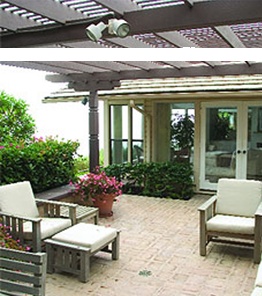
Of course, not all neighborhoods are created equally, and even within this sheltered enclave there exists an array of diversity. Dynamics driving the appeal of a neighborhood can shift, and what was hot a few years ago can cool, and vice versa. For example, downtown La Jolla — “the Village” — though always quaint, has not necessarily drawn a high percentage of La Jolla buyers until about the past five years. “The Village is as hot as a pistol,” says Marti Gellens, a real estate agent with Prudential California Realty. “People want an urban lifestyle, the ability to live in town and walk to restaurants, the theater, entertainment — it’s very desirable.” So much so, that many of the area’s apartments are being converted into condominiums — and selling rapidly in the under $1 million — but just barely — price range.
 |
Another currently popular neighborhood enjoying a renewed high level of demand is Bird Rock. Located in the southwestern-most corner of La Jolla, original homes in the area have tended to be on the small side — very beach cottage-ish at a typical 1,000-square-feet of living space — perhaps one reason it has not had the allure of more estate-lined neighborhoods. But that’s all changed. The La Jolla school district has always ranked high, but Bird Rock elementary in particular has become a lure for young families. “The school is a pull,” confirms Gellens, “so Bird Rock is an area that has begun to really attract families. The streets are flat, the yards are cute — and often lined with white picket fences — it has that kind of charm.” Rodger agrees about the family atmosphere and popularity of Bird Rock, saying the area has undergone a “big renaissance.” Older homes are being razed and replaced with custom dream dwellings, and the Bird Rock portion of La Jolla Boulevard has likewise undergone rejuvenation, lined with shops and restaurants — many of which have become community landmarks. | |||
And because it started at a lower range than many surrounding neighborhoods, Bird Rock boasts La Jolla’s highest rate of property appreciation.
But let’s not forget the old favorites. Characterized by big lots, traditional estates, and a more stately elegance, Muirlands continues to draw those who want land and, contrasted against Bird Rock’s more outgoing style, offers a more discreet, reserved existence. Though it may be possible to find a home here for around $1.5 million, most are selling for twice that and more.
With easy access to
surrounding biotech and biomedical communities, the La Jolla Farms area,
sandwiched between UCSD and the Pacific, tends to attract those who are
a bit older, successful in business, semi-retired, or younger self starters
who like bigger lots — typical properties range in size from three
quarters of an acre to as much as five acres — and an estate-like
appeal. Priced in the several millions and up, homes here do not fall
into any typical style category, rather there is a mix to suit all tastes.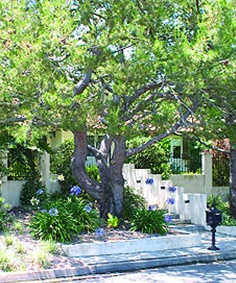
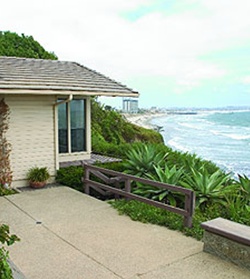
Part of La Jolla’s appeal has always been access to the ocean, so it’s no surprise that La Jolla Shores, with access to the flattest and most user-friendly beach in the area, continues to attract ocean lovers. A short walk from many residences, Avenida de la Playa plays host to a vibrant commercial district that thrives with boutiques and restaurants. This blend of the utmost in residential living, proximity and accessibility to the ocean, and commercial convenience makes the area seem brimming with the best of all worlds.
And the future of La Jolla real estate? Definitely bright according to Andrew Nelson, president and owner of the Willis Allen Company. Nelson believes interest rate fluctuations will have little effect on a market in which many buyers are mostly cash, and is convinced that factors like proximity to central San Diego and the airport, not having to endure “the merge” in peak traffic hours, and the area’s superb educational system will continue to fuel a situation where demand far outpaces supply. Not that he thinks it will all be smooth sailing, “There are definitely short term concerns — if Kerry wins [the Presidential election], what’s going on in Iraq — that people have in the forefront of their minds these days. But 10 years from now, people are going to be saying, ‘Why didn’t I buy that house?’ and kicking themselves for not getting in earlier.”
© 2004 Rocket Publishing Company, Inc. 760.942.2330 P.O. Box 676130, Rancho Santa Fe, CA 92067
